Technological factor marketization is a cornerstone of refining the market economy and a key instrument for achieving high-level tech self-reliance and fostering a new development paradigm. Taking the establishment of National Technology Transfer Centers as a quasi-natural experiment, this paper examines the impact of technological factor marketization on corporate total factor productivity (TFP). The results show that technological factor marketization significantly boosts TFP. Mechanism testing indicates that this effect is mainly achieved through enhanced technology spillovers, increased corporate innovation, and a deeper division of labor. Heterogeneity analysis reveals that the promotion effect is more pronounced for firms with higher government innovation subsidies, those in high-tech and highly competitive industries, and those located in regions with a more mature market for technological outcomes. The findings of this paper not only offer novel insights into the microeconomic consequences of technological factor marketization, but also provide robust empirical evidence to guide policy-making aimed at fostering firm growth.
/ Journals / Foreign Economics & ManagementForeign Economics & Management
JIN Yuying, Editor-in-Chief
ZhengChunrong, Vice Executive Editor-in-Chief
YinHuifang HeXiaogang LiuJianguo, Vice Editor-in-Chief
Technological Factor Marketization and Corporate Total Factor Productivity: A Perspective Based on the Establishment of National Technology Transfer Centers
Foreign Economics & Management Vol. 48, Issue 07, pp. 82 - 99 (2026) DOI:10.16538/j.cnki.fem.20260226.201
Summary
References
Summary
Cite this article
Liu Chen, Lyu Kefu. Technological Factor Marketization and Corporate Total Factor Productivity: A Perspective Based on the Establishment of National Technology Transfer Centers[J]. Foreign Economics & Management, 2026, 48(7): 82-99.
Export Citations as:
For
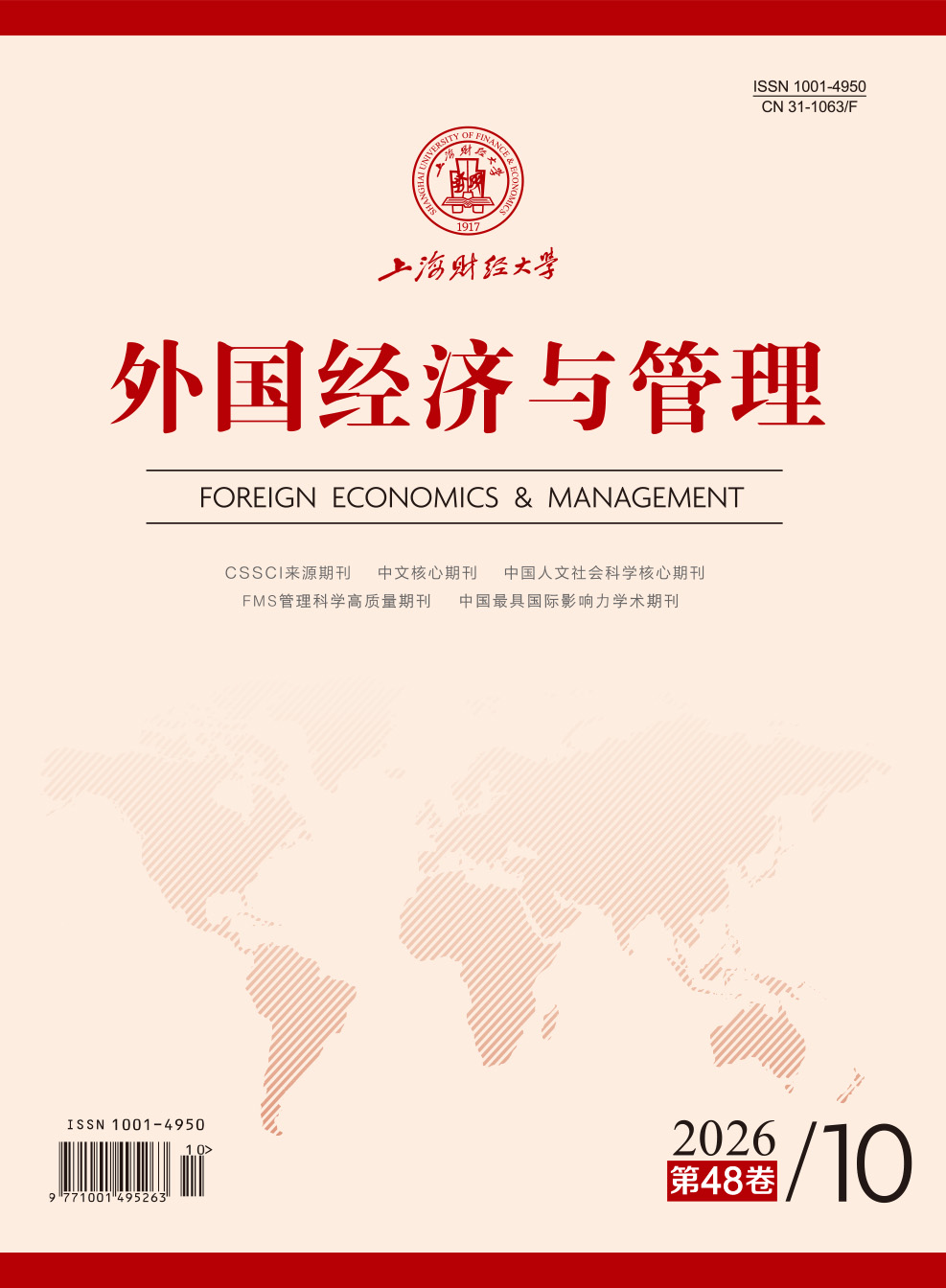
ISSUE COVER
RELATED ARTICLES


12
9