

 3248
3248  2292
2292Data is a new type of production factor with fundamentally different attributes from traditional objects of rights. Enterprise data embodies labor input and extracts information value, making the right to enterprise data both feasible and justified as an independent right to regulate the unique interest relationships above it. Protecting enterprise data under trade secrets does not align with the operational logic of the digital economy, whereas the Anti-Unfair Competition Law focuses on regulating unfair competition behaviors that infringe upon enterprise data rights. The general civil property interests and competitive advantage interests inherent in the right to enterprise data should receive coordinated protection from civil law and the Anti-Unfair Competition Law. Only when the right to enterprise data becomes an independent civil right can it receive universal remedies and foundational protection under tort law, which regulates behaviors infringing upon enterprise data rights, thereby clarifying the scope of legally protected enterprise data rights. Moreover, the principle of fault-based liability helps balance the interests of rights holders in controlling their rights and the freedom of external entities. Blanket recognition of data rights may lead to overgeneralization of rights, while subject-based recognition of enterprise data rights helps establish a legal foundation for scenarios such as data inclusion in financial statements and data transactions. Against the backdrop of classified recognition of personal data, enterprise data, and public data, future legislation should separately stipulate the right to enterprise data, defining its subject, object, content, publicity, and limitations. Since the right to enterprise data is a type of dominion right, an enterprise’s control over the data object can be categorized into static and dynamic control, direct and indirect control, and individual and collaborative control. Given that the subject of data rights can exclusively enjoy the content of the rights, a specialized registration and publicity system for enterprise data rights should be established. To prevent data monopolies, various data processing and organization activities that create new data forms and generate new data value should all be entitled to derive corresponding data rights. Both works and data can be infinitely replicated, so the principle of fair use in copyright law can be adapted to establish a fair use system for enterprise data rights, promoting a balance between the protection of enterprise data rights and data circulation.
 / Journals / Journal of Shanghai University of Finance and Economics
Journal of Shanghai University of Finance and Economics
LiuYuanchun, Editor-in-Chief
ZhengChunrong, Vice Executive Editor-in-Chief
GuoChanglin YanJinqiang WangWenbin WuWenfang, Vice Editor-in-Chief
The Logical Justification and Institutional Design of Enterprise Data Rights as an Independent Right
Journal of Shanghai University of Finance and Economics Vol. 28, Issue 04, pp. 139 - 152 (2026) DOI:10.16538/j.cnki.jsufe.2026.04.010
Summary
References
Summary
Cite this article
Zhang Anyi. The Logical Justification and Institutional Design of Enterprise Data Rights as an Independent Right[J]. Journal of Shanghai University of Finance and Economics, 2026, 28(4): 139-152.
Export Citations as:
For
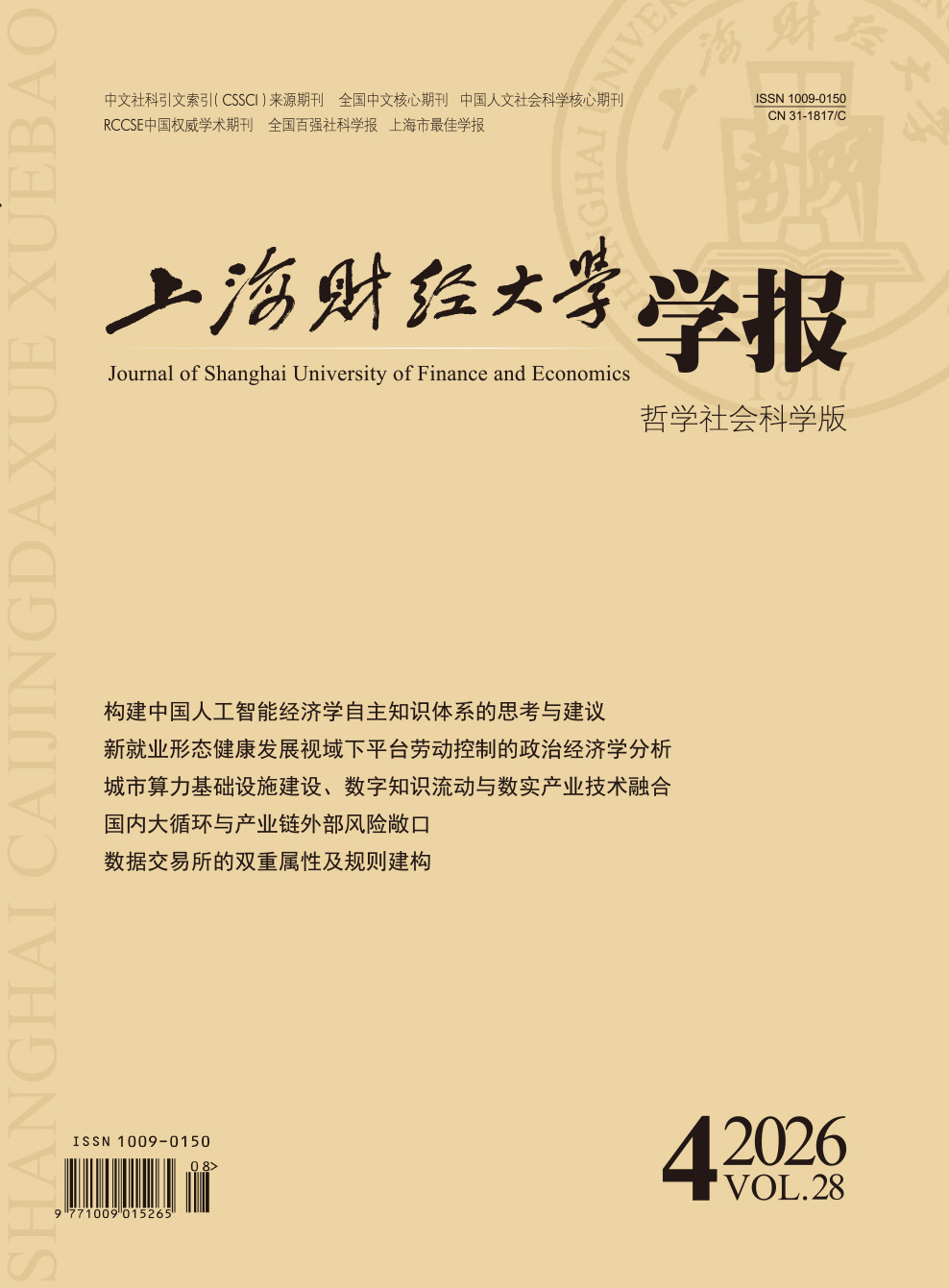
ISSUE COVER
RELATED ARTICLES