

 3898
3898  6707
6707Against the backdrop of demographic structural shifts and the diminishing infinite elasticity of labor supply, the intense “talent war” among cities competing for high-skilled labor has escalated. However, decentralized talent subsidy decisions based on local interests often overlook cross-regional externalities and the global efficiency of spatial skill allocation, easily leading to public resource distortion and functional factor misallocation. How to design differentiated talent attraction policies adapted to various city endowments to fully unleash skill dividends and promote coordinated regional development has become a major practical issue. This paper develops a quantitative spatial equilibrium model incorporating cross-regional migration of heterogeneous labor to illuminate how municipal talent subsidies shape the spatial elasticity of heterogeneous labor supply and reconfigure skill distribution. It calibrates the model using 2020 city-level data in China and conducts counterfactual simulations to quantify the optimal talent subsidy rate, the improvement of heterogeneous labor welfare brought by different talent subsidy policy schemes, spatial skill distribution, and economic growth. The results show that labor migration responsiveness to subsidies exhibits significant spatial heterogeneity, jointly determined by municipal development objectives and skill complementarity. Critically, it demonstrates that excessive nationwide subsidy competitions impose net welfare losses by distorting spatial allocation efficiency. Instead, talent subsidies in emerging first-tier cities uniquely achieve synergy among three policy goals: stimulating economic growth, enhancing welfare for both skilled and unskilled workers, and promoting regional convergence, highlighting their pivotal role in efficient spatial policy design. The policy implication is to establish differentiated subsidy strategies matching the city tier. First-tier and new first-tier cities should focus on targeted subsidies to leverage agglomeration spillovers, while third- and fourth-tier cities should avoid blindly imitating high-monetary subsidies and instead enhance city attractiveness by improving infrastructure, increasing urban amenities, and reducing migration barriers to prevent resource misallocation risks.
 / Journals / Journal of Shanghai University of Finance and Economics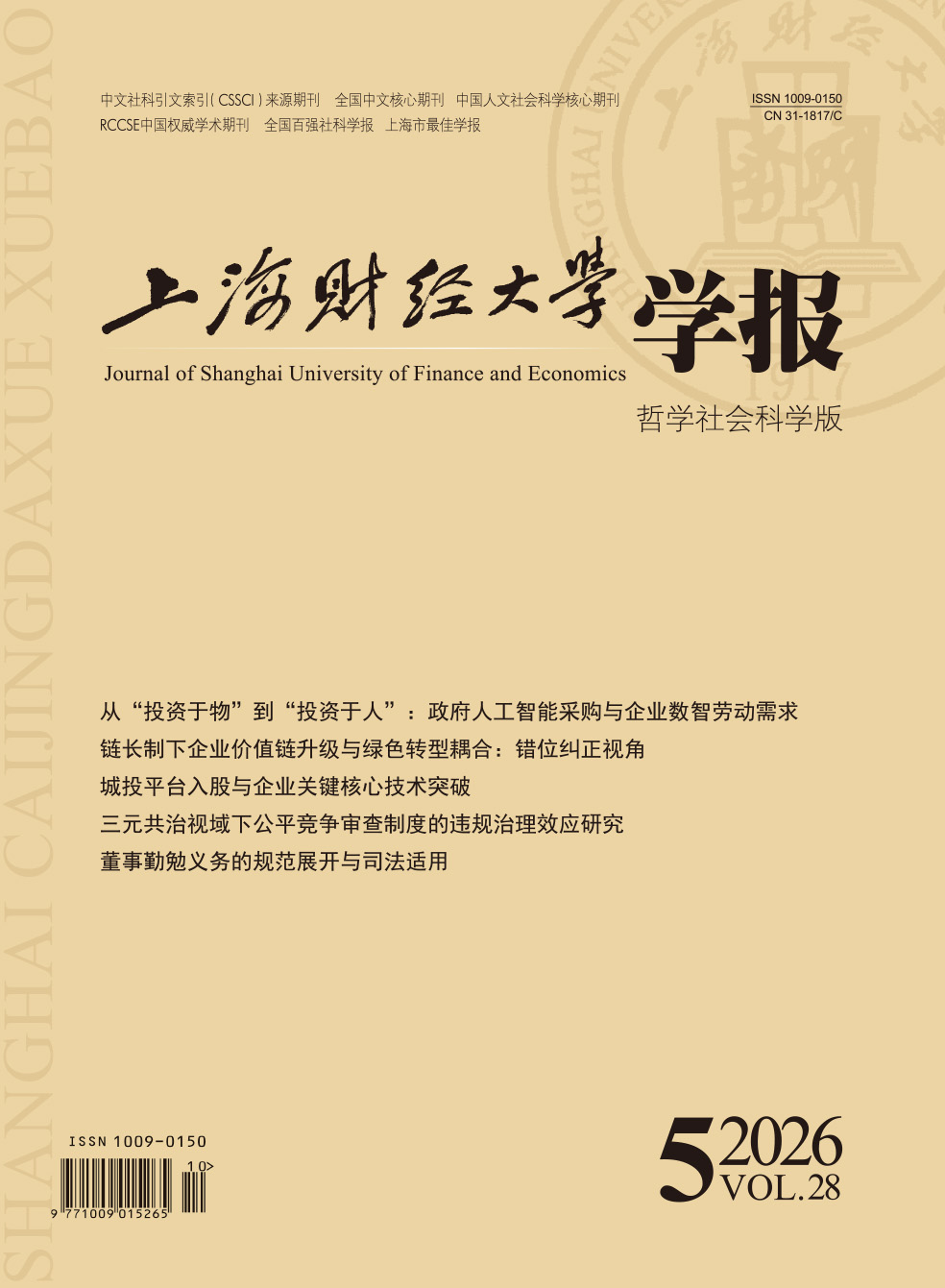
Journal of Shanghai University of Finance and Economics
LiuYuanchun, Editor-in-Chief
ZhengChunrong, Vice Executive Editor-in-Chief
GuoChanglin YanJinqiang WangWenbin WuWenfang, Vice Editor-in-Chief
Talent Subsidy Policy, Heterogeneous Labor Migration, and Economic Welfare
Journal of Shanghai University of Finance and Economics Vol. 28, Issue 03, pp. 122 - 136 (2026) DOI:10.16538/j.cnki.jsufe.2026.03.009
Summary
References
Summary
Cite this article
Xu Shaojun, Liu Xiuyan. Talent Subsidy Policy, Heterogeneous Labor Migration, and Economic Welfare[J]. Journal of Shanghai University of Finance and Economics, 2026, 28(3): 122-136.
Export Citations as:
For